This gold calculator UK tool estimates what your items are worth in pounds sterling right now. Enter the weight, select the carat, and get a live price based on the current spot rate. Whether you have broken jewellery, a single coin, or mixed scrap, this price tool provides results in seconds using real-time pricing from the London bullion market.
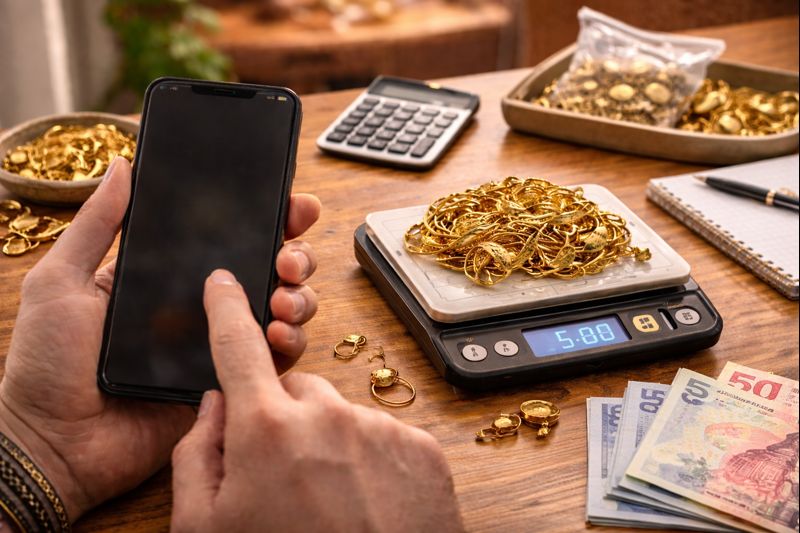
Scrap builds up quietly in most households. A snapped chain, a ring that no longer fits, dental pieces from years ago, or unwanted items tucked in a drawer. Checking the scrap price today helps you decide whether to sell, hold, or compare offers from buyers across the United Kingdom.
Gold Calculator UK
Find out what your gold is worth in British pounds.
Estimates based on current spot price in GBP and typical buyer payouts. Actual offers may vary. Britannias and Sovereigns may be worth more than melt value due to CGT-exempt status and collector premiums.
How the Live Rate Per Gram Works
The spot price is the current market price for one troy ounce of pure precious metal, set by trading activity on the London bullion market. That figure converts into pounds sterling so you can compare directly with UK dealer listings. Both international demand and GBP exchange rate movements affect local pricing throughout each session.
Most buyers in the United Kingdom quote prices per unit weight rather than per ounce. This tool displays the real-time rate so figures match what dealers actually offer. If you’re checking values for silver items too, our UK silver calculator works the same way. Whether you want to sell jewellery or simply estimate the value of your collection, knowing the per-unit rate is the first step.
Purity, Carat, and Fineness Explained
Fineness is a measure of how much precious metal an item contains, expressed as parts per thousand. The carat system converts that into a simpler scale. Pure forms bend easily, so most jewellery mixes with harder alloys for durability. The carat of your piece directly affects what it commands on the open market.
Common UK carat types include:
- 9ct (37.5% pure, 375 fineness) is the most common standard in affordable British jewellery
- 14ct (58.5% pure, 585 fineness) sits between everyday and fine pieces
- 18ct (75% pure, 750 fineness) is typical in higher-end modern jewellery
- 22ct (91.6% pure, 916 fineness) appears in traditional ornamental styles
- 24ct (99.9% pure, 999 fineness) is the standard for bars and investment coins
Check hallmarks to confirm purity. If stamps are missing or worn, a professional assay office test confirms the exact fineness. The precious metals glossary on this site explains hallmark terms in plain language.
What Items Can You Assess?
This scrap valuation tool works for jewellery, bars, coins, dental pieces, and loose fragments. Condition doesn’t affect the estimate because only weight and purity determine the value. Mixed collections built up over years are common, and the tool handles any combination.
One mistake I see repeatedly is people weighing items with clasps, stones, or non-metal parts still attached. Remove anything that isn’t precious metal before stepping on the scale. Weigh each piece separately on a kitchen scale for the most accurate reading. Costume jewelry (items with no real precious metal content) won’t return a meaningful figure, so check for hallmarks first.
How to Sell Your Scrap for the Best Price
Looking to sell? The current scrap price changes throughout each trading day, which affects available offers. To sell your scrap at the best price, compare at least three quotes from different buyers. Cash for scrap shops (sometimes called “Cash4Gold” outlets) vary widely, and what they pay depends on volume, purity, and their margins.
- Use this tool to establish your item’s melt value as a baseline
- Request written quotes from 2 or 3 buyers, including at least one online bullion dealer
- Compare each offer against your calculated figure to see what percentage of spot they’re paying
- Factor in postage, insurance, and any assay fees the buyer charges
In my experience, sellers who arrive knowing the current rate consistently negotiate better outcomes than those relying on a single offer. If you want to check jewelry value for pieces that might have collectible worth beyond melt, a specialist valuation (finance term for a professional appraisal) may be worthwhile.
Why Offers Differ From the Calculated Figure
Buyers never pay the full spot-based amount. Dealer margins, refining costs, and assay fees all reduce the final payout. Expect to receive 85% to 95% of the melt figure depending on purity, quantity, and buyer type. This tool’s result serves as a ceiling, not a guaranteed offer, but knowing it puts you in a stronger negotiating position.
The thing most guides won’t tell you is that payout percentages shift with volume. Selling 50g of 9ct typically gets a better percentage than selling 5g of the same carat. Refiners prefer larger batches because the fixed costs of assaying spread across more metal.
Scrap Versus Bullion: Key Differences
Scrap and bullion both follow the same spot rate, but the gap between calculated value and actual payout differs. Bullion (bars and investment-grade coins like Britannias or Krugerrands) carries lower refining overhead, so dealers pay closer to the full spot figure. Scrap requires assaying and separation, which means wider margins.
If you want to buy precious metals as an investment, bullion premiums tend to be tighter than markup on jewellery. After doing this for several years, I’ve noticed that understanding jewelry worth versus melt worth is where most first-time sellers get confused. A piece with collectible or antique value may fetch more through a specialist than through a refiner.
Get Your Estimate Today
Start by entering the weight and selecting the correct carat above. The tool updates with live data from the London market, so figures reflect today’s conditions. If you plan to sell your items, get your baseline here first, then request quotes from at least two buyers. For those holding as an investment, bookmark this page and check back when the market moves in your favour. Use our gold calculator UK for a reliable starting point before making any decisions.
Frequently Asked Questions About UK Scrap Pricing
How much is 1 gram of 9ct worth in the UK?
The price for 9ct (37.5% pure) changes throughout each trading session. Enter 1 and select 9ct in the tool above for a live figure in pounds sterling based on the current spot rate.
Does this tool include dealer fees?
No. This shows the raw metal content value only. Dealer margins, refining fees, and postage costs are separate. The figure serves as a ceiling for what your items contain at current rates. Actual offers from buyers will be lower.
What is the difference between 9ct and 24ct?
9ct contains 37.5% pure metal and is the most common standard in British jewellery. 24ct is 99.9% pure and used primarily for bars and investment coins. The rate differs because purity directly affects the final figure.
Is now a good time to sell?
Timing depends on your situation and the current rate. Checking the live figure before making decisions helps you compare offers. Many sellers track the price over a few weeks using this tool before committing.
How do I calculate the value of scrap items?
Weigh your items, identify the carat from hallmark stamps, then enter both into the tool. It multiplies weight by the purity percentage and current spot price to produce an estimate.
Who pays the most for scrap in the UK?
Online bullion dealers and specialist refiners typically pay 90% to 98% of spot. High-street “cash for scrap” shops and pawnbrokers usually pay less, often 50% to 80%. Always compare at least two quotes before accepting an offer.