Gold Calculator India: Live Rate Per Gram in INR
This gold calculator India tool converts the weight and purity of your jewellery, bars, or coins into a live value in Indian rupees. Enter grams and karat below to see what your holdings are worth right now. The rate per gram updates throughout each trading session, pulled from current IBJA (India Bullion and Jewellers Association) spot data. Whether you plan to sell at a local jeweller, take a gold loan from a bank, or compare prices before Dhanteras shopping, this is a fast, no-cost starting point grounded in real-time pricing.
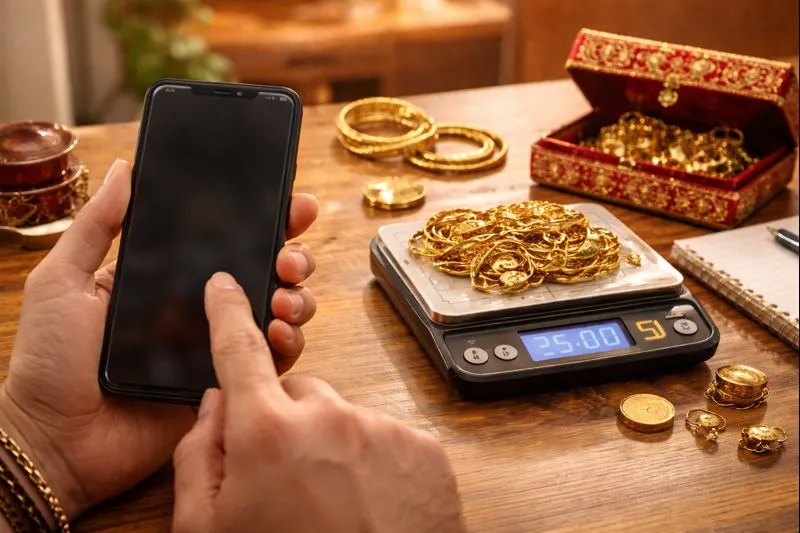
Millions of Indian families hold precious metal as bangles, chains, coins, and bars. Checking the live gold rate before any transaction helps with informed decisions and stronger negotiation, whether you buy, sell, or borrow against your holdings.
Gold Calculator India
Find out what your gold (सोना) is worth in Indian Rupees.
Estimates based on current IBJA spot price in INR and typical buyer payouts. Actual offers may vary. Making charges and GST (3%) will affect buy/sell prices. Hallmarked jewellery (BIS) typically fetches better rates.
How the Gold Rate Works in India
The gold rate in India starts with the international spot price, quoted per troy ounce on commodity exchanges like COMEX and the London Bullion Market. That figure converts into INR using the current USD-INR exchange rate, so both global demand for the metal and the rupee’s strength shape what you see locally.
Several factors influencing gold prices in India sit on top of that base conversion:
- Import duty, currently 6 percent basic customs duty plus 2.5 percent agriculture infrastructure development cess
- GST at 3 percent on the metal value
- Local demand cycles around festivals like Dhanteras, Akshaya Tritiya, and the wedding season (October through February)
- Reserve Bank of India monetary policy and domestic inflation data
The price per gram reflects all these layers. It moves throughout each trading session, sometimes shifting 200 to 500 rupees per 10 grams in a single day when geopolitical events significantly impact prices or the rupee weakens sharply. This calculator uses close to real-time Indian gold prices to estimate what your items are worth at any given moment.
Karat and Gold Purity Explained
Karat is a measurement system for purity, expressed as parts out of 24. Higher karat means a larger percentage of the element and a higher per-gram value. Three levels dominate the Indian market:
- 24K (99.9% pure): Used for bars, coins, and digital holdings. No alloy mixed in.
- 22K (91.6% pure): The standard for traditional Indian jewellery and BIS-hallmarked items. Contains 8.4% alloy (copper or silver) for strength.
- 18K (75% pure): Common in modern, Western-style designs and lighter pieces.
The calculator adjusts automatically based on purity, so a 10-gram 22K bangle and a 10-gram 24K coin produce different figures at identical weights. If hallmark stamps are missing, look for the HUID (Hallmark Unique Identification) number. BIS mandates this code on all hallmarked items sold after 2021, and any certified jeweller can verify it.
Calculate Gold Value for Jewellery, Bars, and Coins
Jewellery is the most common form of precious metal ownership across India. Bangles, rings, chains, necklaces, and earrings all follow the same formula: weight in grams multiplied by purity percentage multiplied by the current market rate per gram. Condition does not matter because only the metal content drives the melt value.
Bars and coins usually carry clear weight and fineness stamps on the surface, making them straightforward to price. Investors focused on long-term portfolio diversification often prefer these formats because they skip the making charges that jewellery carries. If you hold items from other countries, our gold calculator for the USA, UK gold calculator, and Australian gold calculator convert using local currencies and spot feeds.
Making Charges, GST, and the Final Price
A making charge is the crafting fee a jeweller adds on top of the raw metal cost. It typically ranges from 8% to 25% of the item’s metal value, depending on design complexity. GST applies twice: 3% on the metal component and 5% on the making charge itself. Together, these costs push the purchase total well above the base metal rate.
Making charges are not recoverable when you resell. Buyers pay for metal content only, which is why the resale figure is always lower than the original receipt. In my experience working with first-time sellers, this gap causes the most surprise. Knowing it before you walk into a shop sets realistic expectations.
The calculator above shows the raw metal value only. Compare that number to any dealer or store quote to see how much of the total goes toward non-metal costs.
Using This Tool for Gold Loan Estimates
A secured loan against physical holdings is offered by banks and NBFCs (Non-Banking Financial Companies). Lenders typically advance 75% of the current market value after verifying weight and purity. Checking the rate here before visiting a branch gives you a baseline for what to expect.
Loan amounts fluctuate with the market rate daily, so refresh the page before your appointment. Interest rates vary between 7% and 14% annually depending on the lender, and RBI regulations cap the loan-to-value ratio. If you also hold silver, the silver calculator India tool works the same way.
Why Dealer Offers Differ From the Calculated Figure
One thing most tools skip is explaining why a buyer never pays the full calculated amount. Dealer margins, refining fees, assay testing costs, and transport all reduce the final payout. Expect to receive 85% to 95% of the calculated figure depending on purity, quantity, and the buyer type.
That calculated figure is a ceiling, not a guaranteed offer. One mistake I see repeatedly: accepting the first quote without knowing what your items actually contain at current rates. Branded showrooms like Tanishq or Kalyan Jewellers typically pay 92% to 96%, while pawnbrokers may offer 70% to 85%.
Physical Holdings vs Digital Options
Physical holdings (jewellery, bars, coins) require secure storage and carry making charges when purchased as ornaments. Digital alternatives let investors buy fractional amounts online through platforms like Paytm, PhonePe, or MMTC-PAMP, without storage concerns. Platform fees usually run 1% to 3%.
Both formats track the same underlying international price. This calculator focuses on the raw metal component regardless of format. The choice depends on your investment goals, storage capacity, and whether the cultural significance of physical pieces matters for occasions like weddings and festivals.
Tips for Accurate Results
- Remove stones, enamel pieces, and non-metal attachments before weighing. Only the metal portion counts toward value.
- Use a digital gram scale accurate to 0.1 grams. Kitchen scales often lack the precision needed for smaller items.
- Confirm the karat marking. If no stamp exists, a jeweller’s XRF test costs 100 to 300 rupees and takes minutes.
- Refresh the page right before comparing offers. The rate can shift noticeably within a few hours.
Start by weighing your items and confirming their purity. Then enter those numbers into the gold calculator India tool above to see today’s value. If you plan to sell, visit at least two buyers with that figure in hand so you can compare offers against the live rate and negotiate from a position of knowledge.
Frequently Asked Questions About the Gold Calculator India
How do I calculate the gold rate in India?
Multiply the weight in grams by the purity percentage, then multiply by the current rate per gram. For example, a 10-gram 22K piece uses 10 x 0.916 x today’s per-gram figure. The calculator handles this automatically when you select an item type and enter the weight.
Does the calculator include GST and making charges?
No. This tool shows the raw metal component only. GST at 3 percent on metal and 5 percent on making charges are added by jewellers at the retail level. When selling, those charges do not apply because the buyer pays for metal content at the prevailing market rate.
What is the difference between 22K and 24K gold?
24K is 99.9 percent pure and used primarily for bars, coins, and investment products. 22K contains 91.6 percent pure metal with the rest being alloy for durability, making it the standard for jewellery in India. The rate per gram differs between the two because purity directly affects the final price.
How often do gold rates change in India?
Rates move continuously during market hours based on global trading activity, currency fluctuations, and demand. Domestic figures adjust throughout the day as international spot data converts into INR. Refreshing the page shows the most current figure.
Can I use this tool to estimate a gold loan amount?
Yes. Enter your item’s weight and purity to see its current market value, then multiply by 0.75 (the typical RBI-mandated loan-to-value cap). The actual loan amount depends on the lender’s terms, interest rate, and processing fees.