This Silver Calculator USA converts your items into a dollar figure using the live spot price. Enter the weight, pick a purity level, and the tool returns your melt value in seconds. Whether you hold pre-1965 quarters, American Eagle bullion, or a drawer full of sterling flatware, the math runs automatically based on the current rate per troy ounce.
Silver Calculator USA
Find out what your silver is worth in US Dollars.
Estimates based on current silver spot price and typical buyer payouts. Actual offers may vary based on condition, rarity, and market demand. Morgan and Peace dollars in collectible condition may be worth significantly more than melt value.
How the Live Spot Price Drives Your Result
The spot price is the current trading rate for one troy ounce of pure metal on commodity exchanges like COMEX. That number shifts throughout each trading session based on supply, demand, and investor activity across the United States and global markets. This tool strips out dealer premiums and uses the raw benchmark only.
A troy ounce equals 31.1035 grams, not the standard 28.35 grams you’d see on a kitchen scale. The converter handles that automatically, so the weight you enter matches your scale reading directly. No manual math required.
U.S. Silver Coin Specifications and Melt Values
Pre-1965 U.S. dimes, quarters, and half dollars contain 90% precious metal by weight. Collectors and dealers call these “junk” coins because they trade based on metal content rather than collectible appeal. Here are the most common types:
- Morgan dollar: 26.73 grams total, 0.7734 oz of pure metal. Minted from 1878 to 1921, these remain a staple of serious coin collecting.
- Peace dollar: Same 0.7734 oz of pure content. Produced from 1921 to 1935 by the United States Mint.
- Walking Liberty half dollar: 0.3617 oz at 90% fineness. One of the most recognizable designs in American numismatics.
- Washington quarter (pre-1965): 0.1808 oz. Enter the number of coins in the tool to get a total.
- Roosevelt and Mercury dimes: 0.0723 oz each at 90% purity.
Modern bullion rounds, like the American Eagle, contain exactly one troy ounce of .999 fine metal. Circulated pieces lose mass through wear over decades, so weighing each lot on a gram scale before calculating matters.
Melt Value vs. Collector Market Value
Melt value is the intrinsic metal worth of a coin: weight times purity times the current price per ounce. Market prices can sit well above that floor when collector demand, mintmark rarity, or low surviving populations add a premium. A heavily worn piece trades close to its base metal value even if the date is scarce.
One mistake I see repeatedly: sellers accept the first offer from a pawnbroker without checking the baseline. The spread between intrinsic value and the retail coin price widens during volatile sessions. If you check this tool before walking into a local shop, you’ll know immediately whether the offer is fair. Anything below the melt figure is a bad deal, period.
Sterling, Scrap, and Jewelry Calculations
Sterling is an alloy containing 92.5% pure metal and 7.5% copper. It appears in flatware, trays, candlesticks, and decorative items stamped “925.” This tool handles sterling the same way it handles coins: enter the weight in grams, select the matching purity, and it figures total value based on the live rate.
Scrap pieces work identically. Condition, tarnish, and appearance have zero impact on the raw figure. If you’re selling old jewelry or broken chains, weigh everything on a digital scale accurate to 0.1 grams and use the result as your negotiation floor. Refiners typically pay 94% to 97% of the benchmark for scrap lots.
Tips Before You Sell Precious Metal
- Sort by purity first. Separate 90% coins from sterling (92.5%) from .999 bars and rounds. Mixing them together makes it harder to verify a dealer’s math.
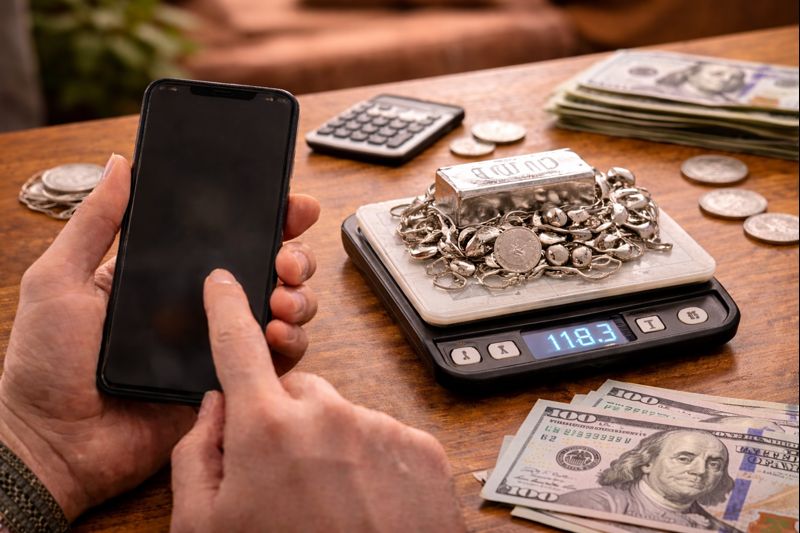
- Use a proper scale. A metallurgical assay isn’t necessary for most transactions, but a digital pocket scale accurate to 0.1 grams costs under $15 and pays for itself on the first sale. Weigh each group separately.
- Collect 3 or more quotes. Online dealers, local coin shops, and refiners each offer different percentages of the spot rate. Market conditions affect spreads, so timing matters.
- Check for collectible worth. Before selling a gold coin or an older dollar for scrap, look up whether the date, mintmark, or condition adds collector value above the base metal price.
Refresh this page to pull the latest live rate before heading to a dealer. The price can move $0.50 or more per ounce within a single session, and that shift adds up fast across a large lot.
How This Tool Calculates Your Result
The formula is straightforward. It multiplies your item’s weight (in troy ounces) by its fineness percentage, then multiplies the resulting content figure by the current spot price. For junk coins sold by face value, it uses the standard 0.715 oz per $1 face conversion that applies to all 90% U.S. coinage.
You can also compare what different buyer types pay. A private sale typically returns 98% to 102% of the benchmark, while a “We Buy Gold” storefront or pawnbroker may offer only 50% to 80%. That gap is why knowing the value based on current market data matters before you commit to any deal.
Other Precious Metal Tools on This Site
If you hold mixed metals, check out our gold melt value tool for U.S. sellers, the platinum tool, or the palladium tool. Each uses the same live pricing and payout estimates. For sellers in other countries, we also offer a Canadian version with local currency conversion.
Get Your Silver Calculator USA Estimate Now
Start by selecting your item type in the Silver Calculator USA above and entering the quantity or weight. Compare the result against at least two dealer quotes before accepting any offer. If you hold a mix of coins, bars, and scrap sterling, run each category separately so you can negotiate each lot on its own terms. Knowing the melt value before you walk into any buyer’s shop is the fastest way to avoid getting shortchanged.
Frequently Asked Questions About Melt Values
What is the melt value of a pre-1965 quarter?
A pre-1965 Washington quarter contains 0.1808 oz of 90% pure metal. Multiply that by the current spot price to find the coin melt value. Enter 1 quarter in the tool above for a live estimate.
Can I use this for sterling flatware?
Yes. Enter the total weight in grams and select 92.5% purity. The tool returns a figure based on the live rate. Condition, tarnish, and polish do not affect the raw metal estimate because refiners pay based on weight and purity alone.
How accurate is this compared to a dealer offer?
This tool reflects the wholesale benchmark (100% of the current rate). Dealers deduct refining costs and their profit margin, so any real offer will sit below this figure. Use the result as a ceiling, then collect multiple quotes to find the best deal.
Does purity vary between coin types?
Yes. Pre-1965 U.S. coins are 90% pure, Kennedy half dollars from 1965 to 1970 are 40%, and war nickels (1942 to 1945) are 35%. Modern bullion like the American Eagle is .999 fine. The tool adjusts automatically based on your selection.
What scale should I use to weigh precious metals?
A digital pocket scale accurate to 0.1 grams works for most transactions. For high-volume lots, a jeweler’s scale calibrated in troy ounces saves conversion steps. Avoid bathroom or kitchen scales because they lack the precision needed for accurate figures.