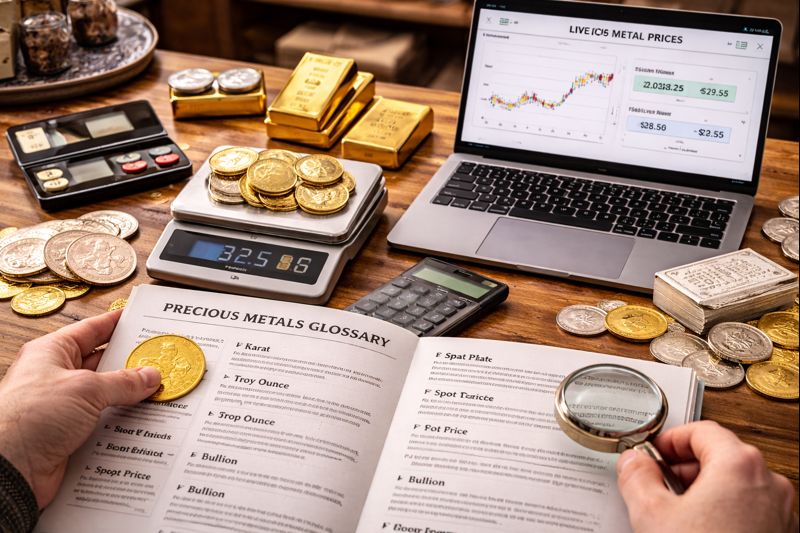
This precious metals glossary covers every term you need before using a gold calculator, silver tool, or platinum tool. Confusing results almost never come from bad math. They come from terminology. Words borrowed from the bullion industry carry different meanings when pricing a coin, bar, or piece of jewelry. Each definition below connects directly to how tools interpret your inputs and why results shift when you change a single setting.
What Is a Precious Metal?
A precious metal is any naturally occurring element valued for rarity, durability, and resistance to corrosion. Gold, silver, platinum, and palladium are the four primary examples. Each trades as a commodity on global exchanges, and each has its own spot price that updates throughout the trading day.
Pricing tools assume the item you are entering contains one of these elements. A precious metal differs from a base metal like copper or nickel, which holds little intrinsic value and often serves as an alloying agent. Selecting the wrong type leads to results that look correct but mean nothing.
Coin Types and How Calculators Treat Them
A coin is a round piece of metal stamped by a mint facility. It may serve as legal tender with a face value, or it may exist purely for its content. The face value printed on a gold coin almost never reflects the true worth of the item.
In pricing terms, a coin sold for its bullion value behaves differently from a numismatic coin collected for rarity. Most tools treat a coin the same as a bar or round when the focus stays on weight and purity. One mistake I see repeatedly: people assume a $20 face value gold coin is worth $20. That number is ceremonial. The actual value depends on the gold or silver content inside.
Bullion Coin vs Numismatic Coin
A bullion coin contains gold or silver close to pure form and trades near the value of its content. Examples include the American Gold Eagle and Canadian Gold Maple Leaf. Restrikes are considered bullion coins when they trade for raw value rather than collectability.
A numismatic coin carries worth beyond its composition. Age, mintage, condition, proof coinage status, and rarity set the price. No formula accounts for numismatic premiums because those depend on collector demand.
Gold Coin and Silver Coin Basics
A gold coin may function as legal tender, bullion, or a collectible. For example, a $10 face value gold coins used as legal tender in the 1800s now contain far more gold than that denomination suggests.
Silver items behave similarly. When sold for content, tools rely on silver content and the current spot rate rather than any historical or legal tender designation. You can check the current value of gold or silver using our silver calculator or gold tool.
Bullion: Bars, Rounds, and Investment-Grade Products
Bullion refers to bars, rounds, or coins valued primarily by weight and purity rather than collectability. Gold bullion and silver bullion move with commodity markets, not stock markets or metals markets tied to paper assets. The bullion market prices items based on content alone.
Pricing tools use live spot data for bullion. Enter a bar or round, and the tool multiplies weight by purity by the current rate. That is the entire math. No design premium, no collector markup.
Gold Bar Specifications
A gold bar is bullion cast or minted in rectangular form. Bars trade strictly on weight and purity. Sizes range from one gram to one kilogram, stamped by a mint facility with a serial number, weight in troy ounces or grams, and fineness. Bars from the Royal Canadian Mint trade at tighter spreads than those from an independent refiner.
Purity, Fineness, and Karat Explained
The purity of a precious metal describes how much actual element exists in an item after alloying. Gold purity appears as karats, where 24 karat means pure gold. An item must contain at least 10 karat or finer gold to qualify as fine gold jewelry. Silver purity appears as fineness numbers like .999, meaning 999 parts per thousand.
Fineness is a numeric expression of purity used for precious metals and gems. For instance, .995 means 995 parts gold and 5 parts of another metal. The fineness of gold matters more than most users realize, since even a small gap (.916 versus .999) changes results significantly.
Alloy, Base Metal, and Why Composition Matters
An alloy contains two or more metals combined to improve durability or change color. Common alloys used with gold create different colors: yellow gold is typically alloyed with silver and copper, while white gold uses nickel or palladium.
A base metal is any common industrial element like copper or zinc used to describe the non-valuable portion of an alloy. Also known as pot metal in collector circles, cheap casting alloys have no recoverable value. Tools subtract base metal weight automatically once you select the correct purity or karat.
Spot Price and How Exchanges Set It
The spot rate is what one troy ounce of a given element costs right now on commodity exchanges. Gold and silver are traded across global markets through spot contracts, with standards set by the London Bullion Market Association. Rates fluctuate based on supply, demand, futures contracts, central bank activity, and interest rates.
If you run the same lookup five minutes apart and get different numbers, the market moved. Exchanges where gold and silver contracts trade include the COMEX in New York.
Buying Price, Selling Price, and Dealer Spreads
The buying price is what a dealer pays you. The selling price is what you pay to acquire an item. The difference between the buying price and the selling price is the spread, covering dealer overhead and profit.
Most tools show melt value based on spot, not final transaction amounts. After doing this for years, one thing I can say confidently: the spread on common bullion runs 3% to 8% over spot for retail buyers.
Metal Content, Jewelry, and How Tools Measure Value
Metal content describes how much of a valued element exists in an item after removing the alloy portion. A piece of metal may weigh the same as another yet contain dramatically different amounts of gold or silver inside. Precious metal content is what pricing tools actually measure. Two rings that look identical can have different karat ratings and therefore different melt values. If you’re unsure about how to check your jewelry’s value, confirm the karat stamp before entering numbers.
Jewelry differs from bullion because it includes design work, gemstone settings, and labor costs. A $2,000 ring might show a melt value of $400 because pricing tools ignore craftsmanship and value only the raw element. For a quick estimate, try our jewelry worth tool.
Troy Weight: The Unit Behind Every Calculation
Troy weight is the measurement system used across the bullion industry. One troy ounce equals approximately 31.1 grams, while a standard avoirdupois ounce equals about 28.35 grams. That roughly 10% difference causes real problems.
If you weigh a piece on a kitchen scale and enter the number expecting troy weight, your result will be wrong. In my experience, this single conversion mistake causes more confusion than any other term in this guide. Always confirm which unit the tool expects before entering weight.
Additional Terms That Affect Calculator Accuracy
- Planchet: a metal disc made for coinage before it receives a strike from the die.
- Obverse and reverse: the front and back faces of a coin.
- Futures contract: an agreement to buy or sell a commodity at a set future date. Trading on stock markets or metals markets helps set the spot rate.
- Ingot: another name for a bar of refined metal, often used interchangeably with mint state bars.
- Assay: a test using acid (like nitric acid or aqua regia) or electronic equipment to determine purity.
Common Mistakes That Trip Up Calculator Users
A few patterns repeat. People confuse spot rates with dealer offers. They enter avoirdupois weight instead of troy weight. They assume face value equals melt value on a coin. Or they select 24K purity for 14K jewelry because they did not check the stamp.
The thing most guides won’t tell you is that avoiding these common mistakes saves more money than finding the “best” tool. Every one of these errors traces back to terminology from this precious metals glossary.
Frequently Asked Questions
What does melt value mean?
Melt value is the dollar amount of the pure element contained in an item, calculated using current spot price, weight, and purity. It represents what the raw material is worth if melted down, ignoring any collector or design premium.
What is the difference between a troy ounce and a regular ounce?
A troy ounce weighs approximately 31.1 grams. A regular avoirdupois ounce weighs about 28.35 grams. All bullion and commodity exchanges price gold and silver in troy ounces, so using the wrong measurement throws off results by about 10%.
Why does my calculator show a different price than what dealers offer?
Most tools show melt value based on spot rates. Dealers add a spread to cover costs and profit. The tool gives you a baseline, and the actual transaction amount depends on the dealer, item type, and current market conditions.
How do I know what purity my item is?
Check for stamps or hallmarks. Gold jewelry shows karat markings such as 10K, 14K, 18K, or 24K. Bullion bars and coins display fineness like .999 or .9999. If no marking exists, a professional assay using acid testing or electronic measurement can determine the composition.
Can calculators price numismatic or rare coins accurately?
No. These tools determine the value based on weight, purity, and spot rate only. Numismatic premiums depend on rarity, condition, and collector demand, which fall outside any formula. Use a pricing tool for the melt value floor, then consult a coin dealer or grading service for the full picture.
Whether you are pricing a coin, a gold bar, or a piece of jewelry, this precious metals glossary gives you the vocabulary to read any calculator result with confidence. The math is simple once the terminology clicks.