The scrap silverware value of a sterling piece is simple math: weight in troy ounces × 0.925 × spot price. Sterling silver is 92.5% pure (stamped 925). Plated flatware has almost no melt worth; the coating is a few grams over a base core. STERLING or 925? Real. EPNS, IS, or WM? Plated, pennies.
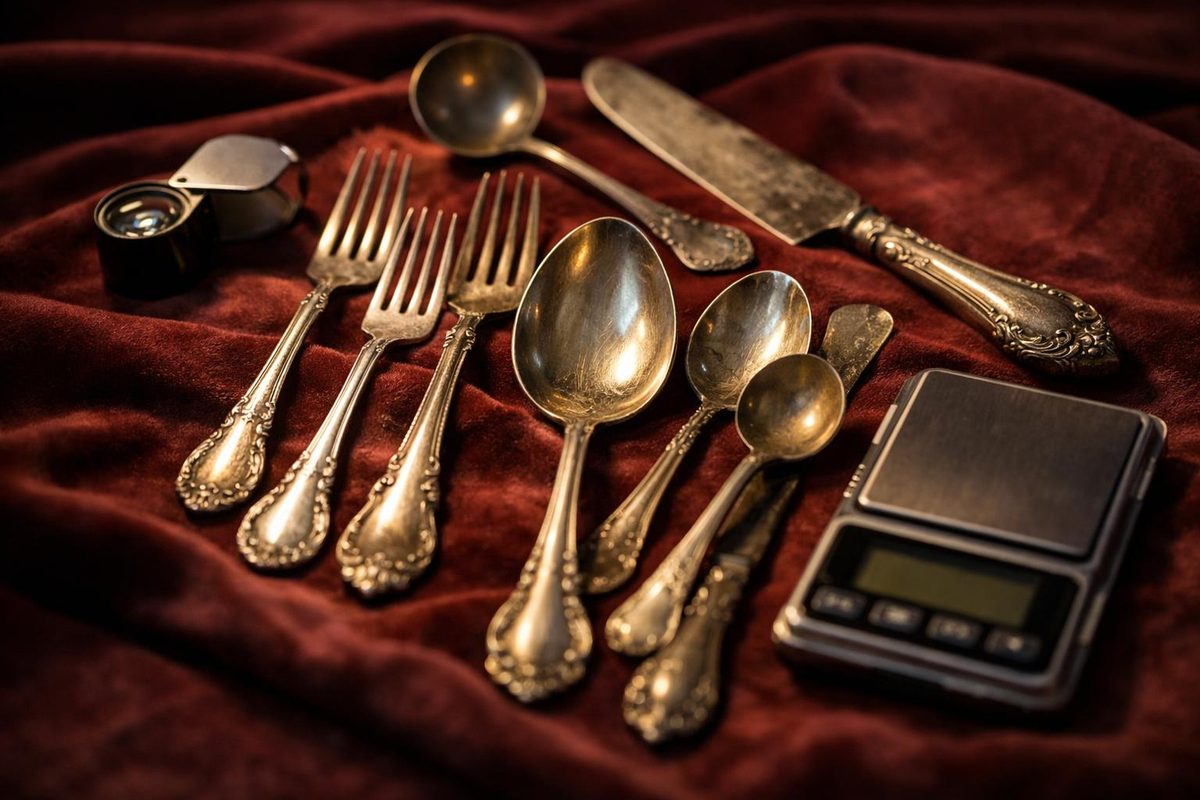
Sterling vs. plated: the marks
Flip a spoon over. Maker’s mark on one end, purity mark on the other.
| Mark | Meaning | Melt |
|---|---|---|
| STERLING / 925 | 92.5% pure | Full |
| 900 | 90% (coin, European) | Full at 0.900 |
| 800 / 835 | German, Dutch, Scandinavian | Full at stated purity |
| EP, EPNS, A1 | Electroplated nickel | Near zero |
| IS, WM, Alpaca | Plate or no silver | Zero |
No mark? Assume plated. Real patinas to warm gray; plated shows copper or brass under worn spots.
Maker marks worth knowing
- Gorham (lion, anchor, G), Reed & Barton (eagle, shield), Wallace, Towle, Tiffany & Co. stamp sterling.
- Pattern matters: Chantilly, Francis I, Grande Baroque, Rose Point, Old Master carry premiums.
- The Online Encyclopedia of Silver Marks covers thousands.
Weigh it right
Use a gram scale reading to 0.1 g. Divide grams by 31.1035 for troy ounces. Dealers quote troy, not kitchen ounces. See our troy ounce page.
Hollow-handle knives are the catch. The handle is a thin sterling shell filled with cement or pitch; the blade is stainless.
| Item | What’s silver | How to weigh |
|---|---|---|
| Spoons, forks | Entire piece | As-is |
| Hollow knives | Handle shell (~30-50%) | Refiner pays per-knife |
| Weighted bases | Thin sheet over plaster | Not by gross weight |
Worked example
- Pile your sterling spoons and forks; skip knives.
- Weigh. Say 465 grams.
- Convert: 465 / 31.1035 = 14.95 troy oz.
- Apply purity: 14.95 × 0.925 = 13.83 troy oz pure.
- Multiply by spot (at today’s spot price) for gross melt worth.
- Refiners pay 85-95%; dealers 70-90%.
Run your numbers through our USA silver calculator. Pre-1965 coins in the mix? Use the junk silver value calculator. Lone Morgan dollar? Numismatic beats melt.
Where to sell
- Refiners: best payout on lots over 50 troy oz.
- Coin and bullion dealers: fair, instant cash, no shipping.
- eBay: best for collectible patterns; check sold listings first.
- Pawn shops: 40-60% of melt. Fastest, worst.
Complete services in a collected pattern beat melt. A 12-place Grande Baroque can fetch two to three times its weight.
Scams to watch for
- Scales reading pennyweight (dwt), not grams. 1 dwt = 1.555 g.
- Quotes “per ounce” without saying troy. Troy = 31.10 g; avoirdupois = 28.35 g.
- Flat per-piece offers. Ask for spot and payout percentage.
- Magnet-only testing rules out steel, not plate.
FAQ
How much is silverware worth in scrap?
A sterling place setting averages 150-200 grams, or 4.5-6 troy oz pure at 92.5%. Multiply by spot and subtract the refiner’s margin.
How much is 1 oz of 925 silver worth today?
One troy ounce of 925 holds 0.925 troy oz pure. Take spot and multiply by 0.925.
How do I know if my silverware is worth money?
Look for STERLING, 925, 900, 835, or 800: all real. EP, EPNS, IS, or WM is plated or base metal.
Who pays the highest for scrap silver?
Refiners win on lots over 50 troy oz. Below that, coin dealers usually beat them once shipping is in.
Is old silverware worth anything if not sterling?
Plated has decorative resale but minimal melt. A plated set might fetch $50-150 on eBay as flatware.
Bottom line
Sort by stamp, weigh in grams, divide by 31.1035, multiply by 0.925, multiply by spot. That’s the scrap silverware value formula. Plated goes in the donation box. Check collector patterns first: an intact Francis I set is worth more whole than as a puddle.